
Dreaming of Dana
Play Dreaming of Dana
Dreaming of Dana Screenshots






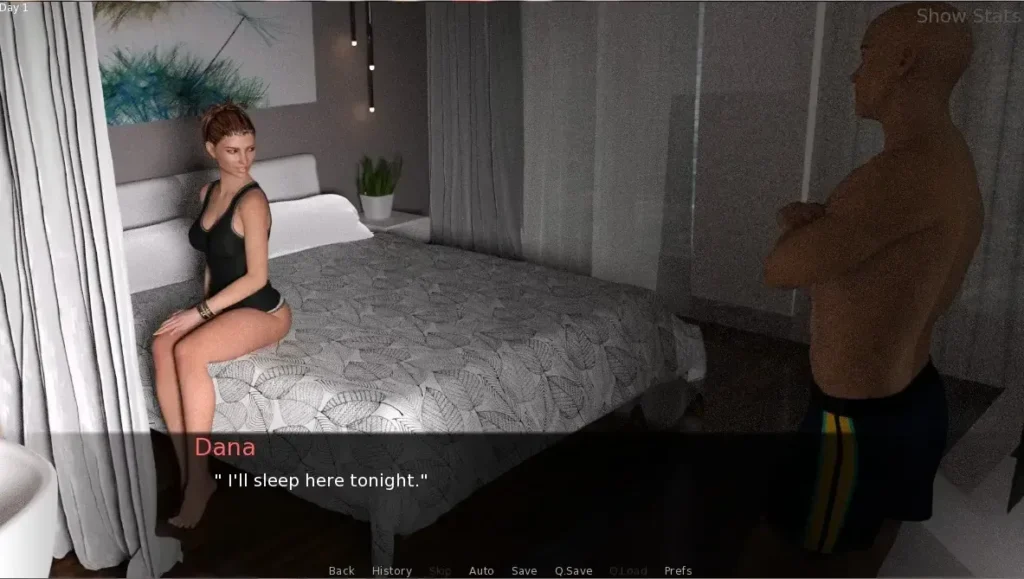

Dreaming of Dana review
Navigate family dynamics, romance, and ambition in this narrative-driven simulation
Dreaming of Dana stands out as a narrative-driven simulation that blends family drama with romance and personal ambition. Players step into the shoes of a wealthy protagonist navigating complex family expectations while pursuing personal desires and romantic connections. This guide explores the game’s core mechanics, character dynamics, and strategic choices that shape your journey. Whether you’re new to the game or seeking to optimize your playthrough, understanding the relationship systems, affection mechanics, and narrative branches is essential for unlocking all content and experiencing the full story.
Understanding Dreaming of Dana: Game Overview & Core Mechanics
So, you’ve downloaded a new narrative game, ready to be swept away by a great story, only to find your choices don’t seem to matter much. The dialogue feels repetitive, the characters are flat, and you can predict the ending from the first chapter. Sound familiar? 😩 I’ve been there, clicking through what feels like a visual novel on rails, where my only job is to watch the story unfold. It’s why I almost passed on Dreaming of Dana—until I gave it a shot and realized it’s playing a completely different game.
Dreaming of Dana isn’t just another story you witness; it’s a world you actively shape, a delicate ecosystem of emotion, ambition, and consequence. Here, you don’t just choose who to date; you navigate the treacherous waters of high-society family expectations, manage a legacy you didn’t ask for, and discover that every kind word or cold shoulder sends ripples through your entire future. This is the heart of true Dreaming of Dana gameplay mechanics. If you’re tired of passive storytelling, buckle up. This guide is your map to one of the richest narrative experiences out there.
What Makes Dreaming of Dana Unique in Narrative Gaming
At first glance, you might slot Dreaming of Dana into the dating sim category. And yes, romance is a huge, glittering part of it. But to call it just a dating simulation is like calling a symphony just a bunch of notes—it misses the magnificent, interconnected whole. 🎭 What sets this game apart is its brutal, beautiful commitment to cause and effect, woven into every system.
You play as the heir to the formidable Sterling family, a position of immense privilege and even greater pressure. You’re not a blank-slate everyperson; you’re someone with a name, a history, and a gilded cage. The core Dreaming of Dana gameplay mechanics force you to constantly juggle your personal desires with your family’s crushing expectations. Want to pursue a forbidden romance with the charming but “unsuitable” artist? Go ahead, but be prepared for your mother to freeze you out at the next board meeting, locking away resources you need for your own business ventures.
This tension is the engine of the game. It’s a family drama simulation game at its core, where unlocking a tender scene with a love interest might mean losing “Family Favor” points, which in turn closes off narrative paths related to your corporate ambitions. The game masterfully uses your character’s wealth not as a cheat code, but as another variable to manage. Money can solve some problems, but it creates others, often alienating you from the genuine connections you seek.
The tone is sharp, witty, and often surprisingly poignant. It doesn’t shy away from the complexities of its themes—class, identity, obligation, and self-discovery. Your choices aren’t between obvious “good” and “evil” but between different shades of compromise, sacrifice, and hard-won victory. This creates a deeply personal story where no two playthroughs feel the same, making it a standout in narrative-driven game choices.
Character Relationships and Affection Systems Explained
This is where the magic—and the meticulous strategy—really happens. Dreaming of Dana features a cast of complex characters, each with their own motivations, secrets, and thresholds for your nonsense. Building relationships isn’t just about picking the flirty dialogue option every time. It’s a nuanced dance, and the game gives you the tools to either perform a beautiful ballet or trip over your own two feet. 💃
The system revolves around two primary metrics: Affection and Sexuality. Think of them as separate dials you’re trying to tune for each character.
- Affection Points represent emotional closeness, trust, and friendship. You earn these through supportive conversations, keeping promises, choosing understanding over judgment, and aligning with their core values. High affection unlocks deeper conversations, backstory secrets, and ultimately, the potential for a committed romantic path.
- Sexuality Points represent physical attraction and romantic tension. These are gained through flirtatious dialogue, playful touches, and choosing options that clearly signal romantic interest. Raising this meter opens up more intimate scenes and steamy encounters.
Here’s the kicker: these meters don’t always move in lockstep. You can be someone’s best friend (high Affection) without a spark of romance (low Sexuality). Conversely, you can have a fiery physical fling (high Sexuality) built on a foundation of sand (low Affection), which will almost certainly crumble. The most fulfilling, stable relationships require careful cultivation of both.
But it’s not just about the one-on-one. This is a living social circle. Gaining favor with one character might inherently lower it with another, especially if they’re rivals or have conflicting interests. The game’s brilliant dating simulation affection system tracks all of this behind the scenes, meaning every coffee date, every text message, and every party interaction is a strategic move.
To help you keep track of the key players in this social chess game, here’s a breakdown of the central cast:
| Character | Role / Vibe | Initial Relationship | Key Interaction Tip |
|---|---|---|---|
| Dana Sterling | Your enigmatic cousin & the family’s “golden child” | Friendly Rivalry | Engage in intellectual debates; she respects ambition but despises sycophancy. |
| Marcus Thorne | The family’s ambitious, cutthroat lawyer | Professional Ally | Show strategic cunning in business matters; he values utility over sentiment. |
| Elara Vance | A visionary (and controversial) artist | Intriguing Stranger | Be authentic and challenge the status quo; she sees through pretense immediately. |
| Julian Devereux | Your childhood friend, now a philanthropic doctor | Warm Friendship | Choose empathetic, selfless options; he’s turned off by displays of pure entitlement. |
| Eleanor Sterling | Your formidable mother & family matriarch | Respectful Tension | Uphold family tradition in public, but choose your moments for private defiance carefully. |
This Dreaming of Dana characters guide table is just your starting point. Each of these characters has branching paths depending on how you manage your character relationship points with them. Remember, in this world, even ignoring someone is a choice with consequences.
Strategic Choices and Their Long-Term Consequences
If the relationship system is the heart of Dreaming of Dana, then the consequence system is its backbone—and it has a memory like an elephant. 🐘 This game excels at branching narrative consequences. There is no “game over, reload save” moment; there are only new, sometimes messier, paths forward forged by your decisions. Small, seemingly innocuous choices in Chapter 2 can resurface dramatically in Chapter 7.
The game’s philosophy is simple: you cannot have it all. Pursuing a rebellious romance will cost you political capital within the family. Focusing solely on your business ambition will leave your personal relationships withered. The most powerful narrative-driven game choices are often the painful ones, where you must prioritize what matters most to your version of the protagonist.
Let me give you a personal example. In my first playthrough, I was determined to win my mother’s approval and build a life with Elara, the artist. I thought I could cleverly balance both. I attended every stuffy gala (gaining Family Favor) but would sneak off to text Elara sweet nothings. By mid-game, I had a moderate score in both areas. Then, the crisis hit: my mother discovered the relationship and gave me an ultimatum. Because I had split my focus, I didn’t have enough Family Favor to call her bluff, nor had I secured Elara’s complete trust to assure her we could run away together. I lost on both fronts. It was heartbreaking, and utterly brilliant game design.
To avoid my fate, you need to think long-term. Here are some key decision points to watch for:
- The Gallery Opening: Do you publicly praise Elara’s avant-garde work, earning her deep affection but scandalizing the family? Or do you offer a muted, polite response, safeguarding your reputation but wounding her trust?
- The Boardroom Vote: When Marcus proposes a ruthless but profitable corporate takeover, do you side with him (boosting his alliance and your business metrics) or with Julian, who argues passionately for ethics (damaging business growth but solidifying a pure friendship)?
- The Family Trust Fund: Do you use a portion of your trust to secretly bail out a struggling friend, risking catastrophic discovery? Or do you invest it all in the Sterling legacy as expected, securing your position but sacrificing a personal moral imperative?
- Dana’s Proposal: When Dana approaches you with a scheme to undermine a common rival, do you join her cunning plot, strengthening your bond as allies-in-arms? Or do you refuse, maintaining your integrity but potentially creating a powerful enemy within your own home?
Each of these branching narrative consequences doesn’t just change a line of dialogue. It alters which scenes you can access, which characters will even speak to you, and ultimately, which endings are available. The “Ambition” mechanic is directly tied to this. Your ambition isn’t a static trait; it’s a score that reflects your drive for power, success, and legacy. Choices that assert your independence and business acumen raise it, opening endings where you become a titan of industry. Choices focused on connection, art, or philanthropy lower it, leading to quieter, more personally fulfilling conclusions.
In the end, Dreaming of Dana is a game about defining success on your own terms, within a system designed to define it for you. Your playthrough is a unique signature. Will you be the ruthless Sterling heir who commands the boardroom? The black sheep who finds authentic love outside the gilded cage? Or the nuanced diplomat who tries, against all odds, to bridge both worlds? The Dreaming of Dana gameplay mechanics give you the tools, but your narrative-driven game choices write the story. Choose wisely, because in this dream, every detail matters. ✨
Dreaming of Dana offers a rich experience for players seeking narrative depth combined with relationship-building mechanics. The game’s emphasis on family dynamics, personal ambition, and romantic pursuits creates a unique blend of storytelling and interactive choice-making. Success in the game requires understanding how affection systems work, recognizing the weight of your decisions, and balancing competing priorities between family expectations and personal desires. Whether you’re pursuing specific character endings or exploring all narrative branches, the game rewards thoughtful engagement with its systems and characters. Take time to experiment with different choices, pay attention to how characters respond to your decisions, and remember that your path through Dreaming of Dana is uniquely yours—shaped by the priorities and values you choose to embody throughout your playthrough.